 Beginners Glance Tour
View journey
Beginners Glance Tour
View journey
Cultural tour
Glimpse of Bhutan Tour
5 Days 4 Nights · Easy
Duration5 Days 4 Nights
DifficultyEasy
Elevation2,200 – 4,235 m
Tour TypeCultural
Overview
The flight into Paro on our national carrier, Druk/ Bhutan Airline, is a befitting introduction to the spectacular beauty of our country. In clear weather, magnificent views of the world’s highest peaks give way to the lush green Paro valley as you land. The first gift from Bhutan
will be the cool, clean fresh air as you step out of the plane.
Welcome to Bhutan, the land of experiencing “Happiness”. After clearing customs and visa control at Paro International Airport, you will be greeted by our guide and driver holding Experience to Bhutan placard with your name(s) on it and a big smile on their faces, all the way till yours last day at the departure hall. Happy stay in Bhutan and experience happiness.
Itinerary
Day 1: Arrival in Paro, head towards Thimphu
Elevation: 2,320 meters
Welcome to Bhutan, the land of experiencing “Happiness”. Touching down at Paro International Airport, you will be greeted by your guide upon exiting the arrival hall. We will take it easy to acclimatise to the altitude. Drive to Thimphu, capital of Bhutan. Once you settle into your hotel, we will begin to unlock the mysteries of Bhutan by touring Thimphu’s most important sites.
National Memorial Chorten was built in 1974 to memorialize Jigme Dorji Wangchuk, the third king of Bhutan (1928-1972). A chorten is a stupa, or hemispherical structure, that is used as a place of meditation. The whitewashed building with a golden finial on top is a popular location for prayer as it represents the strength and kindness of our beloved third king.
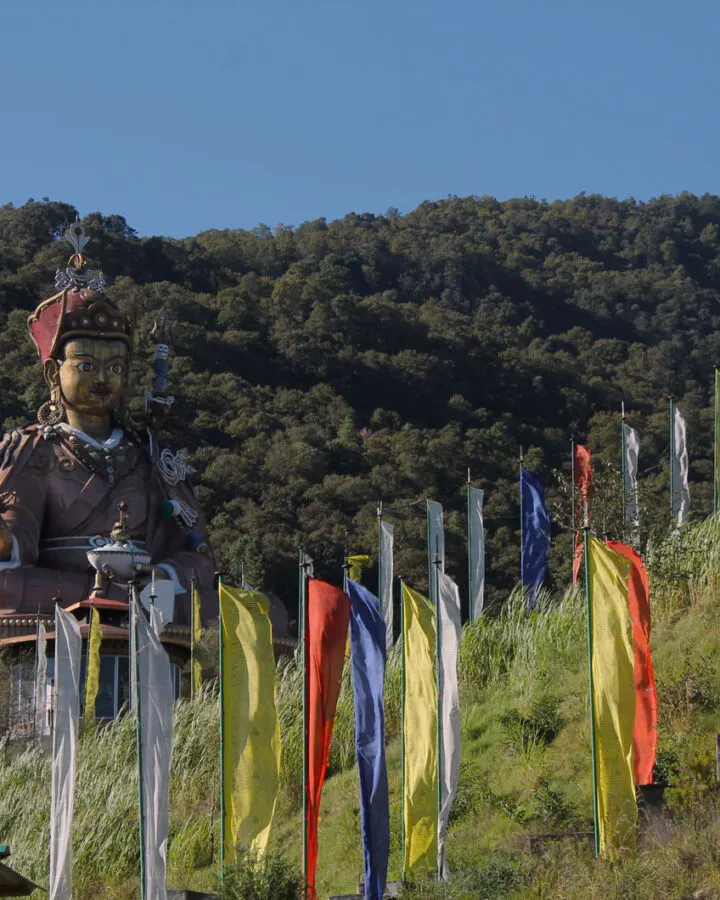
A giant golden Buddha Statue sits at one of the mountains in Thimphu known as Kunzangphodrang. Its presence reflects the dominant religion in Bhutan. Buddhism plays a strong part in the daily life of the Bhutanese. The Buddha Dordenma is the largest sitting statue of the Buddha yetasuring in at measuring 51.5 meters in height and made of solid bronze. Inside the Buddha are 125,000 smaller Bhuddha statues, 25,000 12 inch statues and 100,000 8 inch statues. Tourists often drive once to see it as its view is without a doubt outstanding as the giant Buddha although large is not opposing but rather has a calm and assuring look.
Simtokha Dzong Built in 1629, it was the first fortress of its kind in Bhutan and features beautifully painted Buddhist murals and carvings inside. Simtokha means “demon stone” and legend has it that the fortress was used to contain a demon inside a rock which was terrorizing the region. Today, it is home to one of the premier monk-taught Dzongkha learning centers, the national language of Bhutan.
Simply Bhutan is an interactive ‘living’ museum that gives a good guided introduction to various aspects of Bhutanese traditional life. Visitors get to learn how to distil Ara, dress up in traditional clothes, try out archery and hear songs sung by Bhutanese women as they build houses out of rammed earth. Demonstrations are performed throughout the day to show how the Bhutanese people have lived over the centuries. It’s a good family experience. There are also souvenir shops and a restaurant.
Motithang Takin Preserve, home to one of the strangest looking creatures on earth. The takin is a gentle moose-like animal that is described as looking like it was stung by a bee. Originally a small zoo, the king decreed that it was not in alignment with Buddhist practices to pen up animals, and they were released into the wild. The takin however, refused to leave and began wandering the city streets in search of food. The preserve was established, and Bhutan’s national animal is now taken care of by royal decree.
Walk around Thimphu Town, shop and walk around Thimphu Town.
Overnight, Hotel in Thimphu.
Day 2: Thimphu to Punakha
Elevation: 1,300 meters
After breakfast then we proceed to Punakha, the ancient capital of Bhutan. The drive takes maximum of 3hrs from Thimphu to Punakha across Dochula pass. Leaving Thimphu the road climbs steeply through a forest of pine and cedar, festooned with hanging lichen high up near Dochula pass (3,100 m). This pass often offers panoramic views of the Himalayan mountain ranges. After stopping for tea and the view, we descend along a series of hairpin bends to the valley of Punakha.
Chimi Lhakhang also known as fertility temple located in the beautiful village of Sopsokha a half hour walk across a local village and rice fields from the road head, this temple was built in 1499 and is located on a hillock in the centre of the valley. It is dedicated to Lama Drukpa Kunley, who in the late 15th century used humor, songs and outrageous behaviour to dramatize his teachings and hence is also known as the “Devine Mad Man”.
He is also the saint who advocated the use of phallus symbols as paintings on walls and as flying carved wooden phalluses on house tops at four corners of the eaves. Traditionally symbols of an erect penis in Bhutan have been intended to drive away the evil eye and malicious gossip. Wooden phallus inside temple is used to bless people who visit the monastery on pilgrimage, particularly women seeking blessings to beget children. Do not miss the master’s deeds painted on the walls inside the fertility temple.
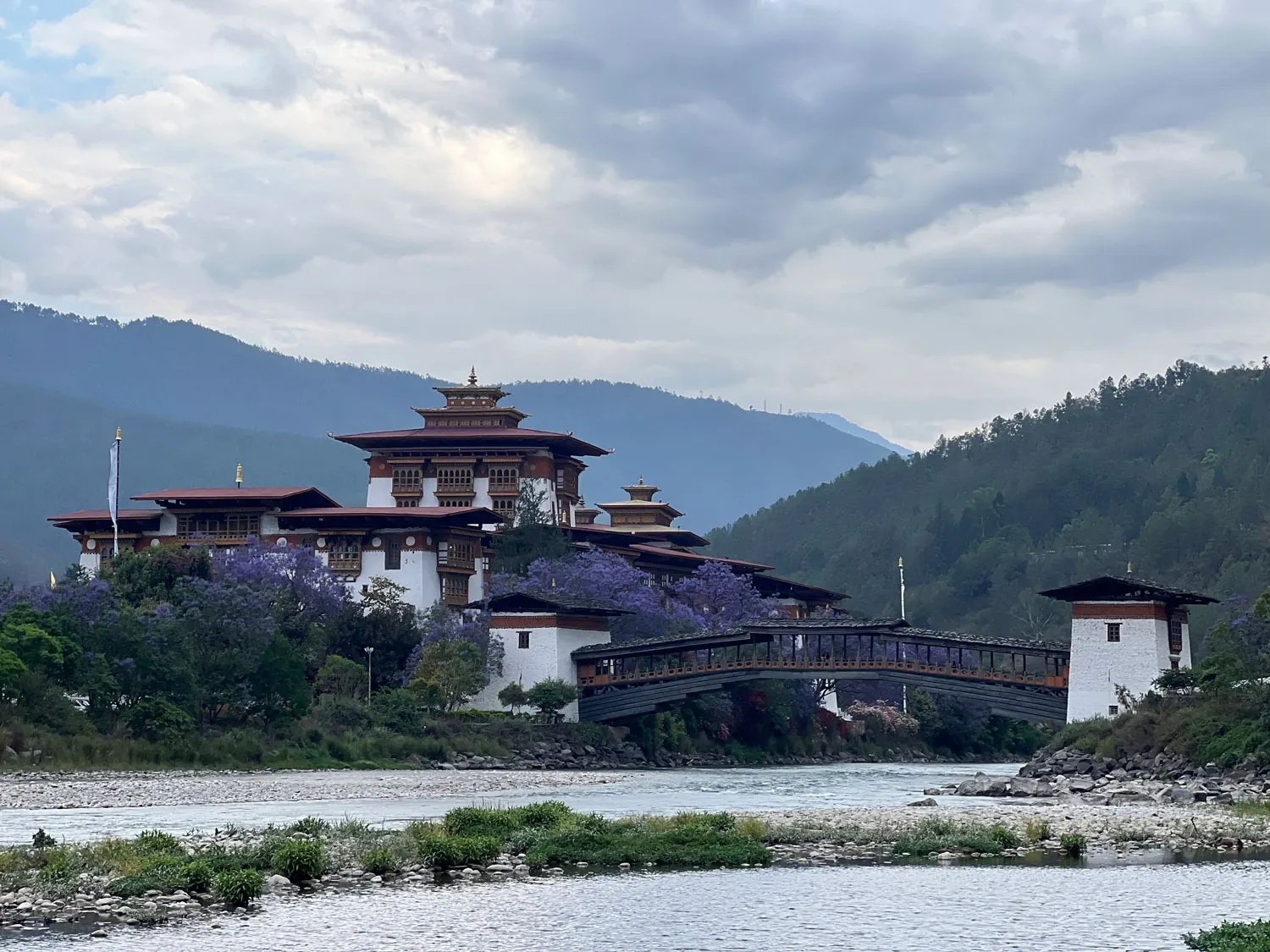
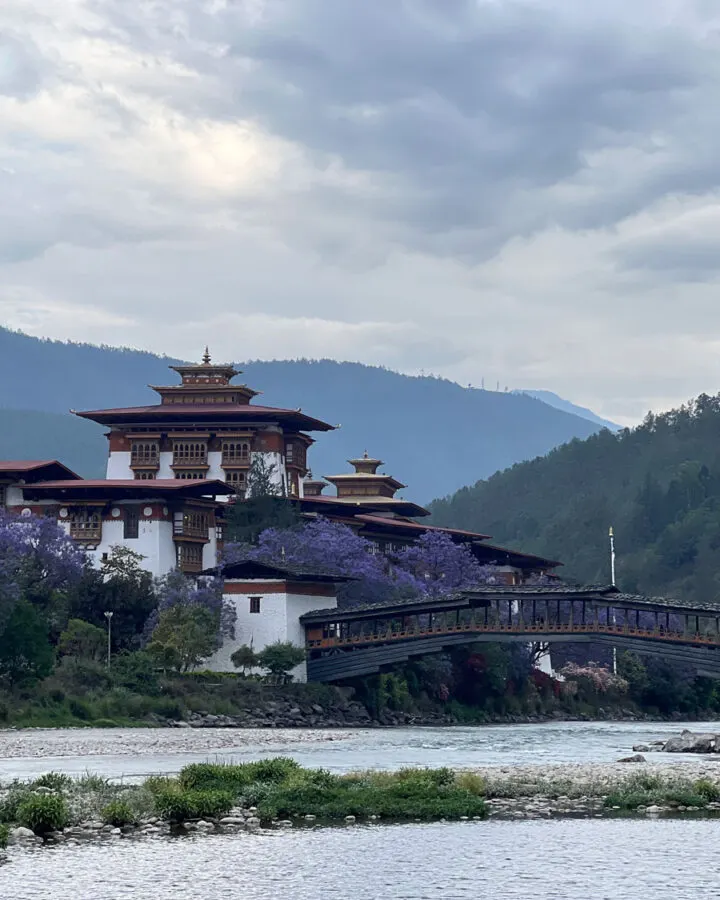
Punakha Dzong massive architectural structure of the 17th-century Punthang Dechen Phodrang, was strategically built on a river island at the confluence of Phochu (male) and Mochu (female) rivers in Punakha. While the rivers provided a natural defence against invaders, they do not obstruct the view of the Dzong. The construction of Punakha Dzong at this strategic location was completed in 1637 AD and it represented the supreme flowering of Bhutanese art and architecture. With spectacular displays of Bhutanese architecture, it stands like a medieval city surrounded by lavender Jacaranda trees. A visit to the Punakha Dzong also presents an opportunity to see and hear the resident monks during their daily prayers, sees the home for the remains of Bhutan’s first ruler, Zhabdrung Ngawang Namgyel and still serves as the winter home of the Je Khenpo, Chief Abbott of the clergy. In 2011, it hosted the royal wedding of King Jigme Khesar Namgyel Wangchuck and Queen Jetsun Pema.
Pho chu suspension bridge the 160 meters pho chu suspension bridge is known for the longest suspension bridge in Bhutan, which gives you spectacular views of punakha dzong and the pho chu valley.
Overnight, Hotel in Punakha.
Day 3: Punakha to Paro
Elevation: 2,280 meters
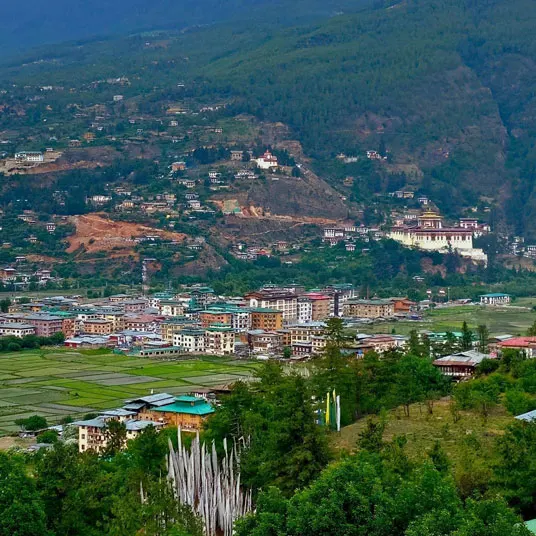
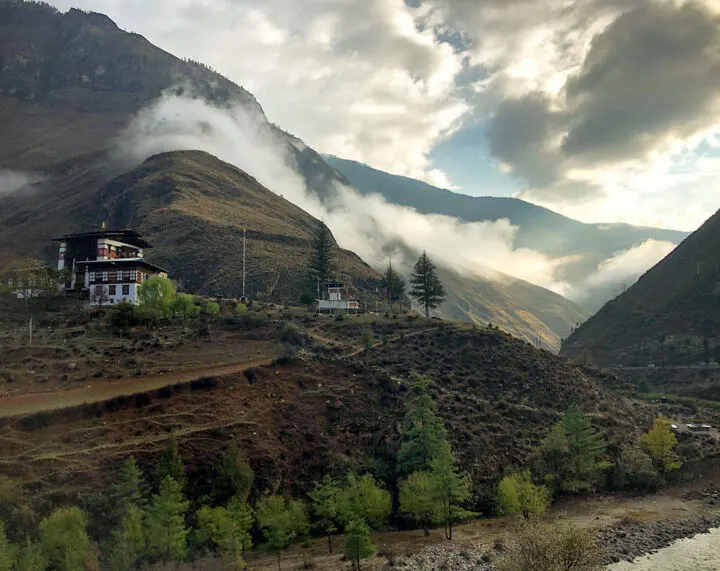
Paro valley extends from the confluence of the Paa Chhu and the Wang Chhu rivers at Chuzom up to Mt. Jomolhari at the Tibetan border to the North. This picturesque region is one of the widest valleys in the kingdom and is covered in fertile rice fields and has a beautiful, crystalline river meandering down the valley. There are over 155 temples and monasteries in the area, some dating as far back as the 14th century. The country’s first and only international airport is also located in the region. Its close proximity to the historical and religious sites in the region has resulted in the development of an array of luxurious, high-end tourist resorts making Paro one of the main destination for visitors.
Rinpung Dzong The magnificent Paro Dzong, overlooking the Paa Chhu from its hilltop site, is one of Bhutan’s strongest and most important fortresses, and repelled several attacks from Tibet. Dzongs developed as fortified monasteries in Bhutan which performed military, administrative and religious functions by housing monastic communities as well as civil administration. Dzongs featured as far back as the 12th century in Bhutan, but many of the most famous and important surviving Dzongs were built in the 17th century as part of a programme to strengthen the valleys against Tibetan invasions. The Paro Dzong is the symbolic center of religious and secular affairs of the Paro Valley.
Ta Dzong – Bhutan National Museum The museum provides a fascinating insight into the development of Bhutan from Stone Age times to the modern era. This institution highlights Bhutan’s Mahayana Buddhist identity and its multicultural heritage. The museum functions as a repository for the valuable artifacts and historical objects that are priceless in documenting the nation’s cultural legacy. The museum’s vast collection of the finest in Bhutanese artwork will appeal to anyone with an interest in the art of the region. A distinctive bridge between the past and the present of Bhutan, the National Museum always makes an impression on the visitor.
Kyichu Lhakhang is one of Bhutan’s oldest religious sites- the seventh century Lhakhang. We pay our respects at Kyichu Lhakhang, one of the oldest temples in Bhutan with its mystical orange tree which bears fruit all year round. Kyichu Lhakhang is composed of twin temples 1) the ancient temple and 2) the recent temple. The ancient temple is deeply respected for its antiquity and holds one of Bhutan’s holiest statues of the Jowo, Buddha as a prince at the age of eight, which is alike to the one in the Jokhang Temple in Lhasa. The recent temple was built in 1968 and is dedicated to Guru Rimpoche.
Drukgyel Dzong the ruins of Drukgyel tell you a tale of how medieval warriors defended Bhutan from the invaders from the north. It was originally built to protect this route from possible Tibetan raids’. The small village of Drukgyel is 11 kms from Paro and near it is the (now-ruined) Drukgyel Dzong, built to commemorate victory over Tibetan invaders in 1644. The strategically sited Dzong guarded the point where the route from Tibet entered Bhutan via the Paro valley. Once the Tibetan invasions ceased the path became the major Tibet Bhutan trade route. The Dzong, surrounded by the snowy peaks of the High Himalayas including the sacred Jhomolhari, served as an administrative centre, until burned down in a fire in 1951 which left it in ruins with only its central tower (utse) standing.
The small township of Paro isn’t very large but it has a more traditional feel than Thimphu’s city and is a fine introduction to some of Bhutan’s unique local products. Around evening you can have leisure time walking around town, visiting good coffee cafe and do handicraft and souvenir shopping in paro town.
Overnight, Hotel in Paro.
Day 4: Taksang Hike (Tiger’s nest)
Walking distance: approximately 4-5 hrs
Difficulty: Moderate-Strenuous
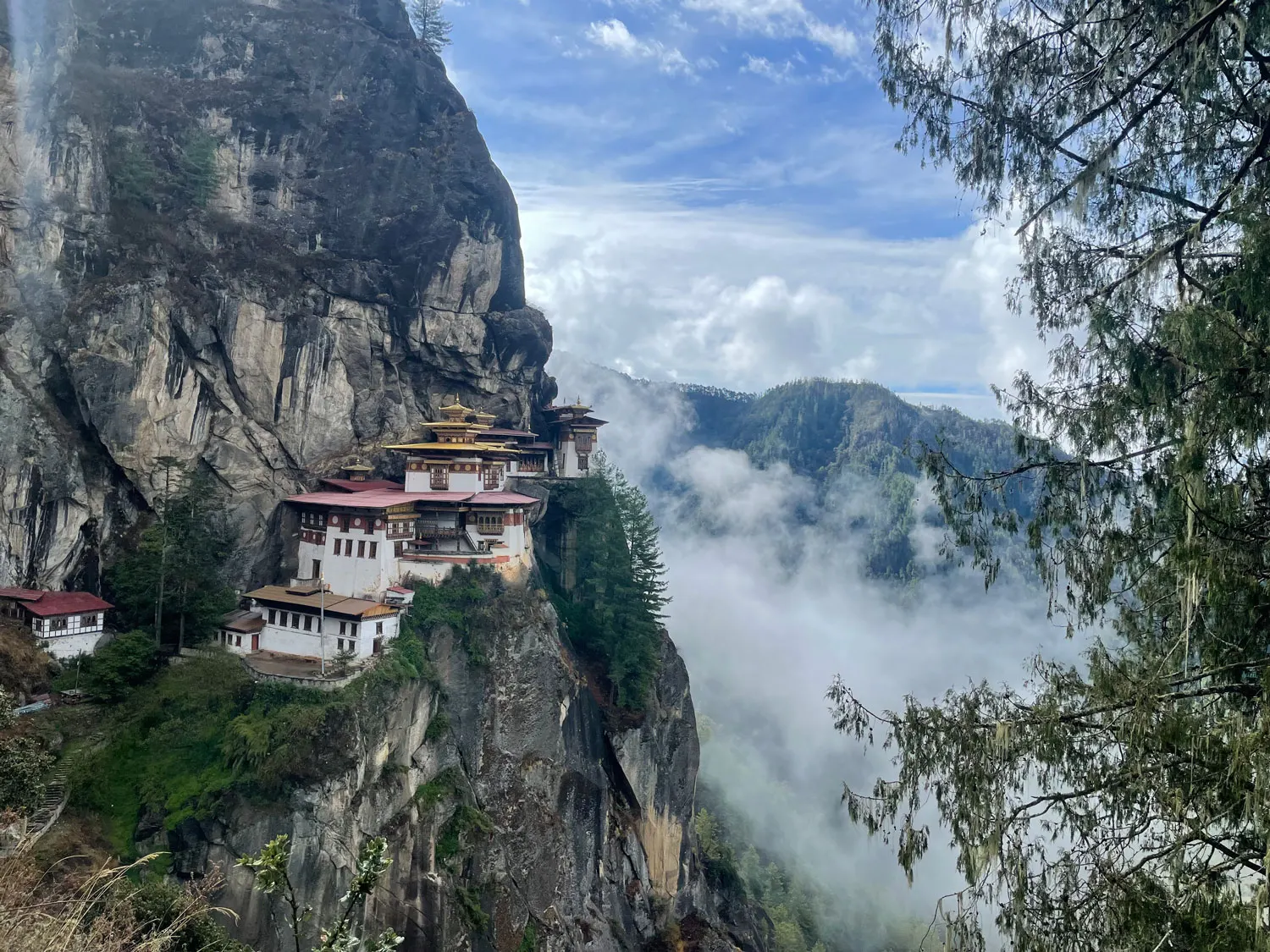
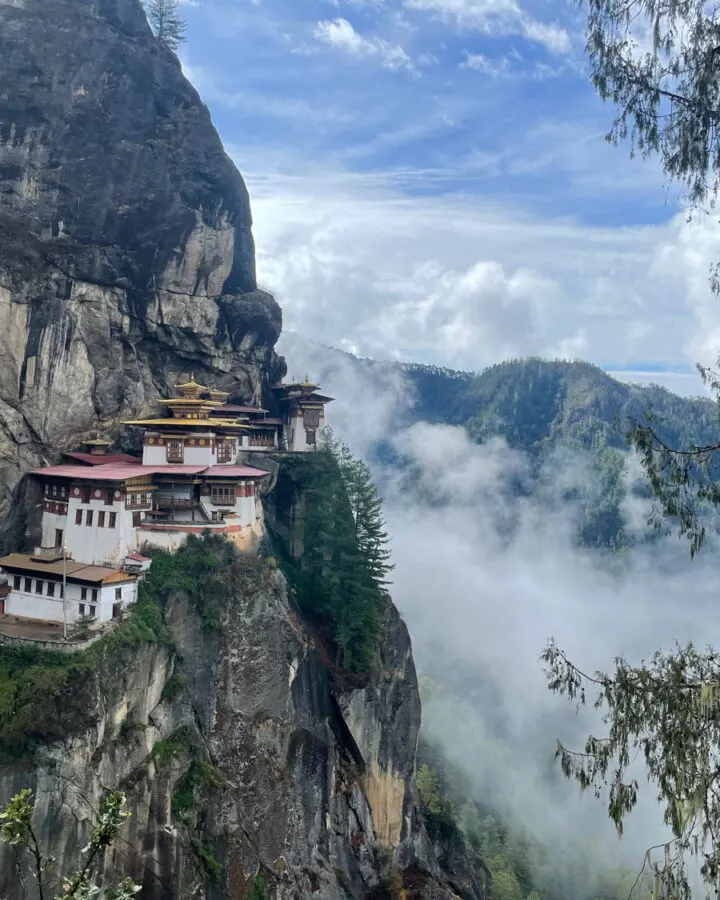
Strenuous treks are extended walking in a mountain terrain at higher altitudes. Trekkers should be able to cope with difficult paths on steep mountainsides. After breakfast, we hike toward one of Bhutan’s most sacred places—the site of a Cliffside monastery and an important pilgrimage destination. Partly damaged by fire in 1998, the Taksang (meaning Tiger’s Nest) Monastery was built atop the cave where Guru Rimpoche, the father of Mahayana Buddhism, meditated for three months after arriving in the Paro Valley on the back of a legendary tigress.
You’re likely to see locals displaying handicrafts for sale along the route to the monastery. The trail rises slowly above the valley, passing through fields, forests and by large prayer wheels turned by a stream. We continue hiking across an open meadow and up a steep trail to a ridge where prayer flags rustle in the wind. Just beyond is the Taktsang teahouse, at 9,200 feet, where we stop to enjoy a hot drink and striking views of the monastery across the valley. Our lunch today takes place at the Taksang View Point Cafeteria enjoying typical Bhutanese food while taking in phenomenal views of the monastery perched across the ravine. We then retrace our steps for the descent back at the base of this rewarding pilgrimage.
Around evening/night Farewell and hot stone bath in Bhutanese farm house
Overnight, Hotel in Paro.
Day 5: Departure
Thank you for visiting Bhutan, we hope you had a great stay here in Bhutan and taking the best memories from Bhutan. Experience to Bhutan wishes you a very safe flight and best wishes, we hope to see you again.
Khadenchela…
What the journey includes
Included
- 3-star hotel accommodation
- All meals (B/L/D)
- Private transportation throughout
- Licensed English-speaking guide
- Experienced driver
- Bhutan visa included
- Government fees, taxes & SDF
- All entrance fees & permits
- Complimentary bottled water
Not included
- International airfare to/from Bhutan
- Personal expenses
- Beverages
- Travel insurance
- Tips & gratuities
Gallery