 Beginners Glance Tour
View journey
Beginners Glance Tour
View journey
Cultural tour
Journey to Central Bhutan
11 Days 10 Nights · Easy
Duration11 Days 10 Nights
DifficultyEasy
Elevation2,200 – 4,235 m
Tour TypeCultural
Overview
The flight into Paro on our national carrier, Druk/ Bhutan Airline, is a befitting introduction to the spectacular beauty of our country. In clear weather, magnificent views of the world’s highest peaks give way to the lush green Paro valley as you land. The first gift from Bhutan will be the cool, clean fresh air as you step out of the plane.
Welcome to Bhutan, the land of experiencing “Happiness”. After clearing customs and visa control at Paro International Airport, you will be greeted by our guide and driver holding Experience to Bhutan placard with your name(s) on it and a big smile on their faces, all the way till yours last day at the departure hall. Happy stay in Bhutan and experience happiness.
Itinerary
Day 1: Arrival in Paro, head towards Thimphu
Elevation: 2,320 meters
Welcome to Bhutan, the land of experiencing “Happiness”. Touching down at Paro International Airport, you will be greeted by your guide upon exiting the arrival hall. We will take it easy to acclimatise to the altitude. Drive to Thimphu, capital of Bhutan. Once you settle into your hotel, we will begin to unlock the mysteries of Bhutan by touring Thimphu’s most important sites.
Tachogang Lhakhang –This ancient temple was built by Thangtong Gyalpo, the Bhutanese legendary iron bridge builder. The story goes that Thangtong Gyalpo was inspired by the vision of the spiritual horse Balaha (an emanation of Chenrizig Avalokiteshvara) when he was meditating at the very same spot of the temple.
National Memorial Chorten – One of Bhutan’s most notable structures is the National Memorial Chorten. The Chorten is a symbol of peace and prosperity throughout the world. The location also acts as a memorial for Bhutanese people to their Third King, His Majesty Jigme Dorji Wangchuck (1928–1972).
Buddha Point (Buddha Dordenma) – The colossal statue of Shakyamuni Buddha, standing 169 feet tall on top of a hill in Kuenselphodrang Nature Park, is a breathtaking and unforgettable sight. One of the largest statues in the world, this enormous one is reputed to give off a serene, joyful vibe.
General Post Office – Travelers adore the office since they create their own stamp there, a one of-a-kind Bhutanese souvenir to gift to loved ones. You can post your customized stamps and letters to your loved ones (friends and families).
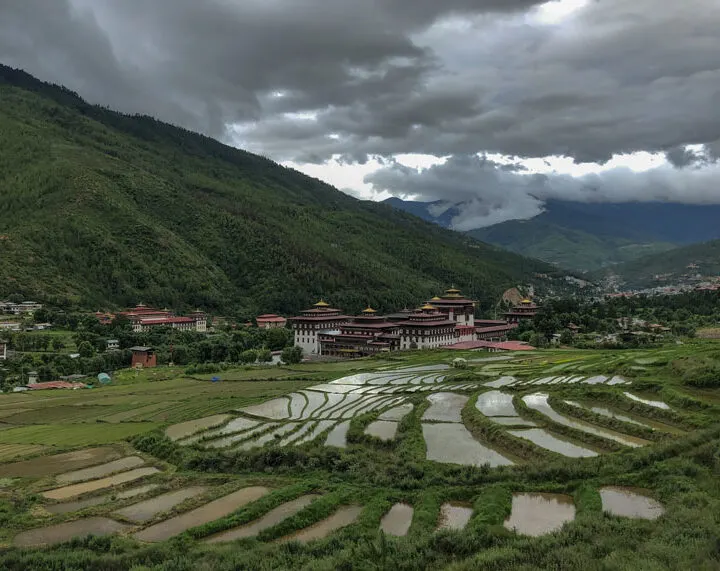
Tashichhodzong (Thimphu Dzong) The “fortress of the glorious religion” was initially constructed in 1641 and restored by the Third King Jigme Dorji Wangchuck in the 1960s. Tashichhodzong houses some ministries, His Majesty’s secretariat, and the central monk body.
Overnight, Hotel in Thimphu.
Day 2: Incursion in Thimphu
Simtokha Dzong Built in 1629, it was the first fortress of its kind in Bhutan and features beautifully painted Buddhist murals and carvings inside. Simtokha means “demon stone” and legend has it that the fortress was used to contain a demon inside a rock which was terrorizing the region. Today, it is home to one of the premier monk-taught Dzongkha learning centres, the national language of Bhutan.
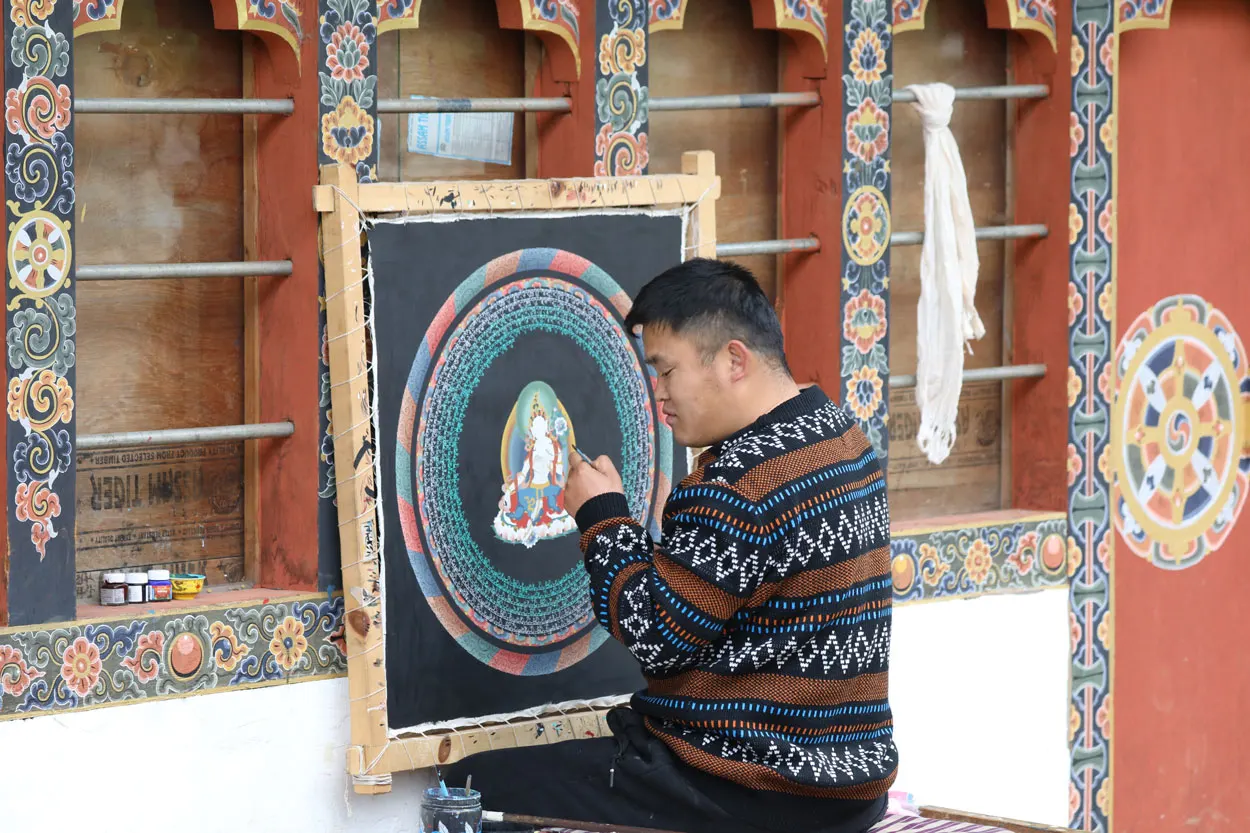
Institute of Zorig Chusum Commonly known as the Painting School or the School of the Thirteen Arts, the Institute offers you a glimpse of novices learning 13 traditional arts and crafts of Bhutan. It is a hands-on trip for you. Enjoy few moments with future artists of the country.
Simply Bhutan is an interactive ‘living’ museum that gives a good guided introduction to various aspects of Bhutanese traditional life. Visitors get to learn how to distil Ara, dress up in traditional clothes, try out archery and hear songs sung by Bhutanese women as they build houses out of rammed earth. Demonstrations are performed throughout the day to show how the Bhutanese people have lived over the centuries. It’s a good family experience. There are also souvenir shops and a restaurant. Simply Bhutan also provides employment to the youth. Young people gain skills in basic business and customer care by working in the museum. Bhutan Youth Development Fund constructed Simply Bhutan with materials from traditional houses in Bhutan.
Centenary Farmers’ Market most of the Thimphu population congregate on the banks of Wangchhu River where the weekend market is held. Villagers from the Valley and other nearby places come to sell their wide range of agriculture products in the market. The market is by far the largest domestic market in Bhutan. A visit to the market provides great photo opportunities, as well as the chance to mingle with local people and perhaps buy souvenirs.
Visit the Archery Ground the national sport of Bhutan. It’s not just sport but also a celebration of a way of life and an expression of Bhutan’s rich culture and heritage, because when Bhutanese engaged in archery it’s not just archery – the players also have to participate in singing and dancing. Family members also join in, so it’s a kind of a social event. Archery in Bhutan is a way of socialization, communication, and development of relations between people. Apart from the grand festivity complete with traditional attire, it is probably the only sport-, where players are allowed to drink! Traditional archery wouldn’t be complete without a lot of indulging in eating and of course drinking. This is something which has been passed down for generations and is still continued!
Walk around Thimphu Town, shop and walk around Thimphu Town.
Day 3: Thimphu to Punakha
Elevation: 1,300 meters
After breakfast then we proceed to Punakha, the ancient capital of Bhutan. The drive takes maximum of 3hrs from Thimphu to Punakha across Dochula pass. Leaving Thimphu the road climbs steeply through a forest of pine and cedar, festooned with hanging lichen high up near Dochula pass (3,100 m). This pass often offers panoramic views of the Himalayan mountain ranges. After stopping for tea and the view, we descend along a series of hairpin bends to the valley of Punakha.
Chimi Lhakhang also known as fertility temple located in the beautiful village of Sopsokha a half hour walk across a local village and rice fields from the road head, this temple was built in 1499 and is located on a hillock in the centre of the valley. It is dedicated to Lama Drukpa Kunley, who in the late 15th century used humor, songs and outrageous behaviour to dramatize his teachings and hence is also known as the “Devine Mad Man”.
He is also the saint who advocated the use of phallus symbols as paintings on walls and as flying carved wooden phalluses on house tops at four corners of the eaves. Traditionally symbols of an erect penis in Bhutan have been intended to drive away the evil eye and malicious gossip. Wooden phallus inside temple is used to bless people who visit the monastery on pilgrimage, particularly women seeking blessings to beget children. Do not miss the master’s deeds painted on the walls inside the fertility temple.
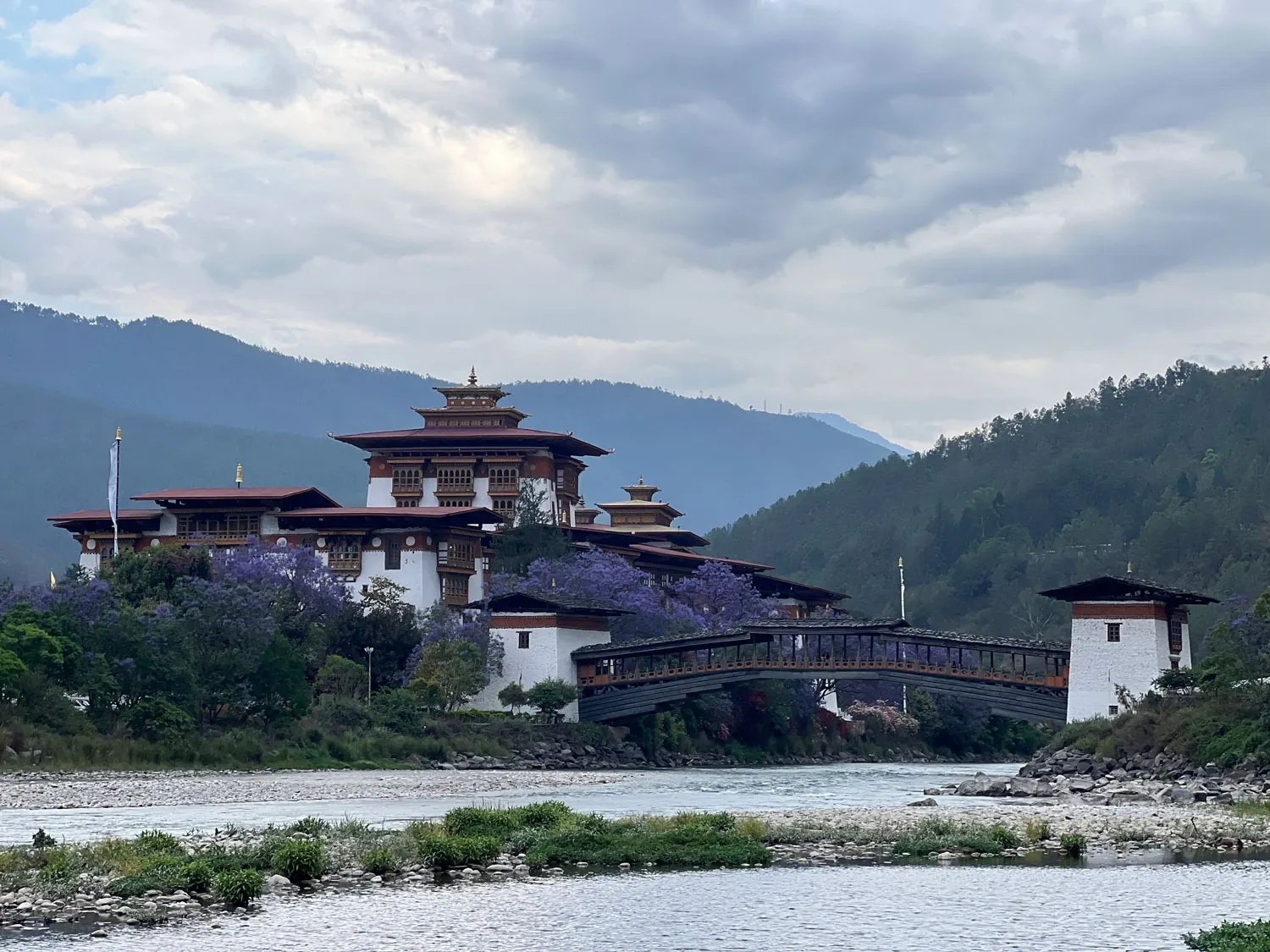
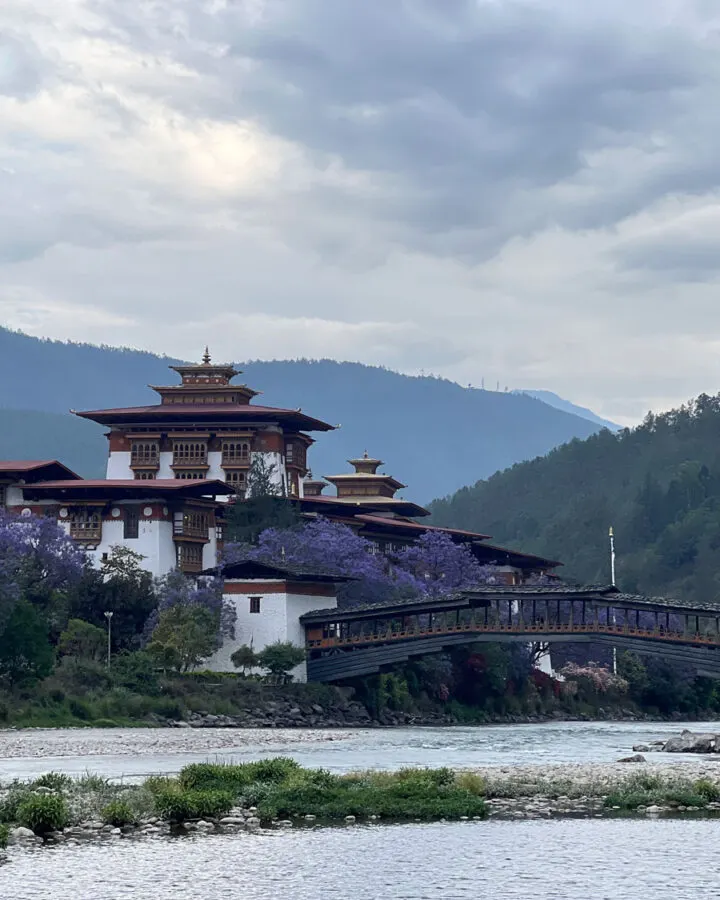
Punakha Dzong massive architectural structure of the 17th-century Punthang Dechen Phodrang, was strategically built on a river island at the confluence of Phochu (male) and Mochu (female) rivers in Punakha. While the rivers provided a natural defence against invaders, they do not obstruct the view of the Dzong. The construction of Punakha Dzong at this strategic location was completed in 1637 AD and it represented the supreme flowering of Bhutanese art and architecture. With spectacular displays of Bhutanese architecture, it stands like a medieval city surrounded by lavender Jacaranda trees. A visit to the Punakha Dzong also presents an opportunity to see and hear the resident monks during their daily prayers, sees the home for the remains of Bhutan’s first ruler, Zhabdrung Ngawang Namgyel and still serves as the winter home of the Je Khenpo, Chief Abbott of the clergy. In 2011, it hosted the royal wedding of King Jigme Khesar Namgyel Wangchuck and Queen Jetsun Pema.
Pho chu suspension bridge the 160 meters pho chu suspension bridge is known for the longest suspension bridge in Bhutan, which gives you spectacular views of punakha dzong and the pho chu valley.
Overnight, Hotel in Punakha.
Day 4: Incursion in Punakha
Elevation: 1,300 meters
Khamsum Yuley Temple [Duration 2 hour, 1 hour to ascend and 1 hour to descend] There is no temple in Bhutan built as elaborately as this. This is a great temple to study the symbolic meanings of frescoes and sculptures. The temple was built by the Queen Mother of the 5th King to remove negative forces and promote peace, stability and harmony in Bhutan and the world. The temple dominates the upper Punakha Valley with commanding views across the Mo Chhu and up towards the mountainous peaks of Gasa and beyond. The view of the valley and the surrounding snow-capped mountains is stunning, the setting of the temple is idyllic, the atmosphere is tranquil and the interior artworks depicting the teaching of Dudjom Rinpoche are magnificent. Linger at this temple, relaxing and simply appreciating the harmonious beauty of the location.
Sangchchen Dorji Lhuendrup nunnery which was financed by the fourth king’s father-in law to serve as a Buddhist college for 120 resident anim (nuns). The attached ridgetop Nepali-style chorten is visible from as far away as the Dochu La to Metshina road. Large temple complex which is located on a ridge beside the neighboring Punakha and Wangdue Phodrang amidst pine trees. The temple complex also has learning and meditation centre for the nuns and it also provides them other trainings such as embroidery, tailoring, statue making, and the famous thangka painting. There is a majestic bronze statue of a height of 14 foot Avalokiteshwara. The statue is also considered as one of the biggest statues in the country made by the unique handwork of many local Bhutanese artisans. Besides, the other statues present here include of Gautama Buddha, Zhabdrung Namgyel Namsum, Saint Padmasambhava, and the 21 Taras, Tsela Namsum and the Tsepamay (Buddha of Longevity).
Walk around kuruthang Town, shop and walk around kuruthang Town.
Overnight, Hotel in Punakha.
Day 5: Punakha to Bumthang via Trongsa
Elevation: 2,800 meters
It takes about 8 hours by car from Punakha to Bumthang, the central district of Trongsa. This is the ancestral home of the Bhutanese royal family and where the first two kings of Bhutan ruled the kingdom. Long before you get there you will see the magnificent Trongsa Dzong in the middle of the valley. The labyrinthine temples, cloisters, offices and monks’ quarters are a masterpiece of Bhutanese architecture, professionally restored in 2004.
Chendebji Chorten two kilometers past the village of Chendebji, Chendebji Chorten is beautifully situated at the confluence of the rivers. A huge white chorten, modeled after Kathmandu’s Swayambhunath, was built by Rama Seeda in his 19th century to cover the bodies of slain demons.
Trongsa, which literally means “new town” in Dzongkha, is where the monarchy of today’s Bhutan began. Each king in the line of succession held the office of trongsa penlop, or governor general, before being crowned with the raven. The foundation stone of Trongsa Dzong was laid in the 16th century. The cornerstone was laid by Pemalingpa, whose heyday was during the time of his 17th-century Shabdrung nawang namgyal. The imposing fortress is a massive structure whose walls rise above the winding Mandechu valley and dominate the east- west road.
Yathra Weaving Center– A well-known weaving center in Chumey valley, Bumthang. Witness and experience Yathra weaving, the regions special woven textile with intricate patterns that has been passed down for generations here in Chumey.
An option to fly domestically from Paro to Bumthang with return or return on road can also be tailored to your requests (please contact us for this request).
Overnight, Hotel in Bumthang.
Day 6: Bumthang Incursion
Elevation: 2,800 meters
The Bumthang Valley is considered the center of Buddhism in Bhutan. It is said that in 746 AD, Guru Rinpoche came here to exorcise demons from the king, then converted the people to Buddhism and restored peace to the region. Guru Rinpoche stayed in this valley and built over 40 temples. Today we will next visit the sacred monastery of Kurji Lhakhang. There, there are rocks that show the imprints on Guru Rinpoche’s body after defeating the powerful demon Shelgin Karpo.
Legend has it that a giant demon left bodies in Tibet and Bhutan to prevent the spread of Buddhism. In 659 AD, King Sontsen Gambo. In one day he built 108 temples and attached them to the ground. Jambey Lhakhang is one of his two temples built on this day in Bhutan, and a colorful festival is held here every October.
Kenchosum Lhakhang Kenchosum Lhakhang is a rural looking temple which has its roots in the 7th century. The current structure, however, dates back to the 15th century when Pema Lingpa, the Treasure Discoverer, restored it and revealed terma (sacred texts and artefacts) on the hillside behind the temple. The temple has three small Buddha statues representing the past, present and the future, are believed to have flown there, hence the name Kencho meaning divine and Sum meaning three. Legend has it that when the bell inside is rung, it can be heard as far away as Lhasa in Tibet.
Jakar Dzong was founded in 1549 by the great grandfather of Zhabdrung Ngawang Namgyal, the father and unifier of medieval Bhutan. Known as the Castle of the White Bird, it was built on top of the hill because the lamas were directed there by a large white bird.
The Swiss Farm Owned by local Swiss Bhutanese Fritz Maurer is where a variety of Swiss cheese and Bhutan’s only native beer, Red Panda are produced.
Overnight, Hotel in Bumthang.
Day 7: Bumthang Incursion
Elevation 2,800 meters
Today we will be exploring Tang valley, this local history museum offers a perfect insight into the lifestyle and living conditions of the nobility of the last century. The large building on the right is Tsugh lhakhang, with his two temples with fine statues and paintings. Artifacts depicting lifestyles are recreated in the original rooms. Everything inside the palace looks like the real thing. Throughout your visit, you will have an intimate sense of stepping into a bygone way of life.
Tang Rimochen Lhakhang is located in the Tang Valley on the west bank of the Tang Chu River, which is famous for its trout fish. The cliff behind this temple rises vertically and is famous for its historical connection with Guru Rinpoche and Pema Lingpa (known as Terton or Treasure Hunter). The rock face is covered with beehives, and the locals use ropes to collect the beehives. The monastery is located 4 km he from the base of the Kunzandra cliffs. A school and the Misethang village are located close to the monastery.
Pema Choling is a non-profit organization dedicated to advancing education and empowering independent girls and women in Bhutan. Pema Choling Shedra is the first Buddhist University to produce women pursuing a master’s degree in Buddhist Philosophy and seeking a spiritual path. This nunnery is made up of nuns from various social and educational backgrounds. Shedra offers her nine-year Master’s Degree in Buddhist Philosophy, as well as other regular school courses.
Mebar Tso Burning Lake – According to legend, Teltong Pema Lingpa had a vision of a sacred treasure that Guru Rinpoche had hidden in the lake centuries ago. However, the Tang people and local rulers were cynical about his claims. To prove his point, Pema Lingpa jumped into the lake with a butter lamp. After being underwater for a long time, he emerged with a chest and a roll of paper in his hand, with the butter lamp still burning brightly in his hand. Later this lake became known as Mebarsho (Burning Lake).
Overnight, Hotel in Bumthang.
Day 8: Bumthang to Gangtey via Trongsa
Elevation: 2,280 meters
To we will be travelling from Bumthang to Gangtey valley via Trongsa where the journey take us around 5 hours’ drive. We will stop in trongsa to see
Ta Dzong – The Ta Dzong is a majestic circular five story tower flanked by two lower towers. With its magnificent design and impressive aesthetic, the Ta Dzong is an awe-striking marvel of traditional Buddhist architecture and a popular tourist attraction. Converted into the National Museum of Bhutan, one of the most fascinating museums travelers can find in the country.
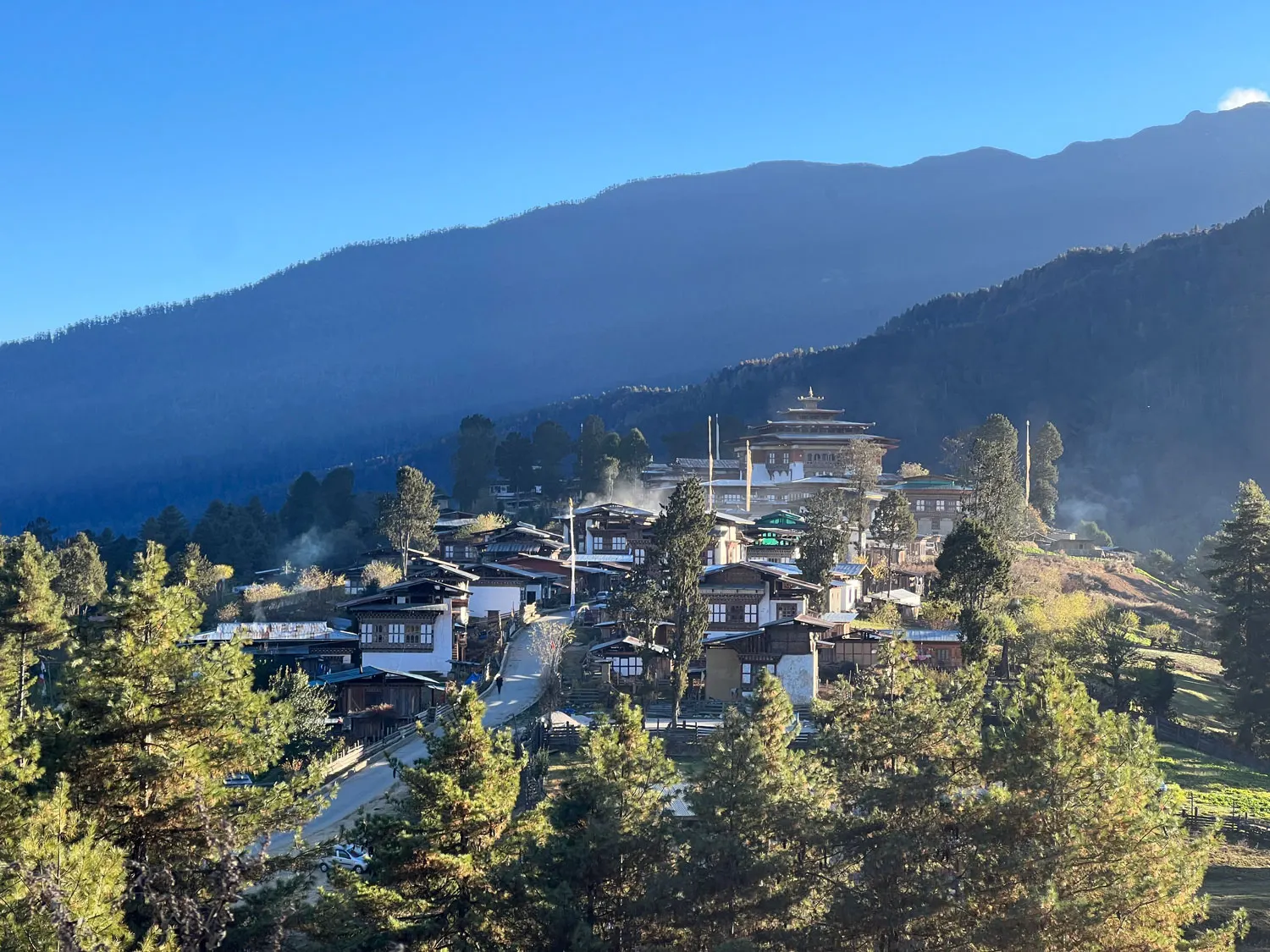
Gangtey Goemba or ‘Gangtey monastery’– The only Nyingmapa monastery in this region, sitting on the crest of a hill on top of Gangtey valley. The monastery was built in 1613 following the prophecy of Pema Lingpa – the famous 15th-century treasure finder.
Gangtey Nature Trail – A scenic hiking trail through the UNESCO-listed Phobjikha Valley. A popular trail leading to Gangteh Gomba, beautiful flower meadows and hills overlooking the village of Semchuvara. The trail continues through a pristine green pine forest to a valley lookout, Where the trail ends at kewang lhakhang.
Black-necked Crane Visitor Center – This center focuses on sustainable ecotourism activities, environmental education, and Phobjikha Valley conservation programs. The location of the building overlooks a wetland with black-necked cranes. In winter, you can cycle, hike, and watch cranes in the valley.
Overnight, Hotel in Gangtey.
Day 9: Gangtey to Paro
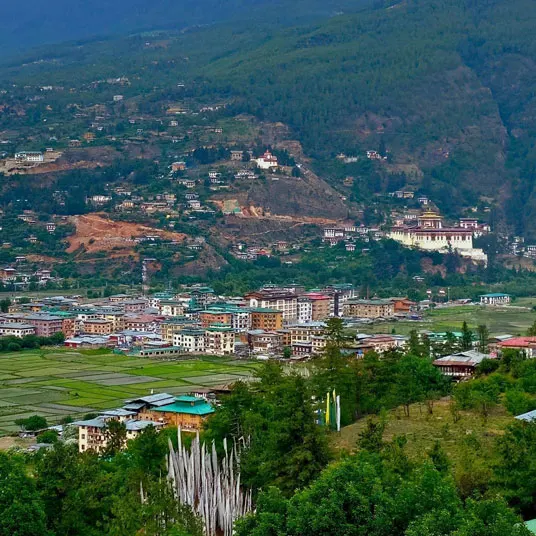
Paro valley extends from the confluence of the Paa Chhu and the Wang Chhu rivers at Chuzom up to Mt. Jomolhari at the Tibetan border to the North. This picturesque region is one of the widest valleys in the kingdom and is covered in fertile rice fields and has a beautiful, crystalline river meandering down the valley. There are over 155 temples and monasteries in the area, some dating as far back as the 14th century. The country’s first and only international airport is also located in the region. Its close proximity to the historical and religious sites in the region has resulted in the development of an array of luxurious, high-end tourist resorts making Paro one of the main destination for visitors.
Rinpung Dzong The magnificent Paro Dzong, overlooking the Paa Chhu from its hilltop site, is one of Bhutan’s strongest and most important fortresses, and repelled several attacks from Tibet. Dzongs developed as fortified monasteries in Bhutan which performed military, administrative and religious functions by housing monastic communities as well as civil administration. Dzongs featured as far back as the 12th century in Bhutan, but many of the most famous and important surviving Dzongs were built in the 17th century as part of a programme to strengthen the valleys against Tibetan invasions. The Paro Dzong is the symbolic center of religious and secular affairs of the Paro Valley.
Ta Dzong – Bhutan National Museum The museum provides a fascinating insight into the development of Bhutan from Stone Age times to the modern era. This institution highlights Bhutan’s Mahayana Buddhist identity and its multicultural heritage. The museum functions as a repository for the valuable artifacts and historical objects that are priceless in documenting the nation’s cultural legacy. The museum’s vast collection of the finest in Bhutanese artwork will appeal to anyone with an interest in the art of the region. A distinctive bridge between the past and the present of Bhutan, the National Museum always makes an impression on the visitor.
Kyichu Lhakhang is one of Bhutan’s oldest religious sites- the seventh century Lhakhang. We pay our respects at Kyichu Lhakhang, one of the oldest temples in Bhutan with its mystical orange tree which bears fruit all year round. Kyichu Lhakhang is composed of twin temples 1) the ancient temple and 2) the recent temple. The ancient temple is deeply respected for its antiquity and holds one of Bhutan’s holiest statues of the Jowo, Buddha as a prince at the age of eight, which is alike to the one in the Jokhang Temple in Lhasa. The recent temple was built in 1968 and is dedicated to Guru Rimpoche.
The small township of Paro isn’t very large but it has a more traditional feel than Thimphu’s city and is a fine introduction to some of Bhutan’s unique local products. Around evening you can have leisure time walking around town, visiting good coffee cafe and do handicraft and souvenir shopping in paro town.
Overnight, Hotel in Paro.
Day 10: Taksang Hike (Tiger’s nest)
Walking distance: approximately 4-5 hrs
Difficulty: Moderate-Strenuous
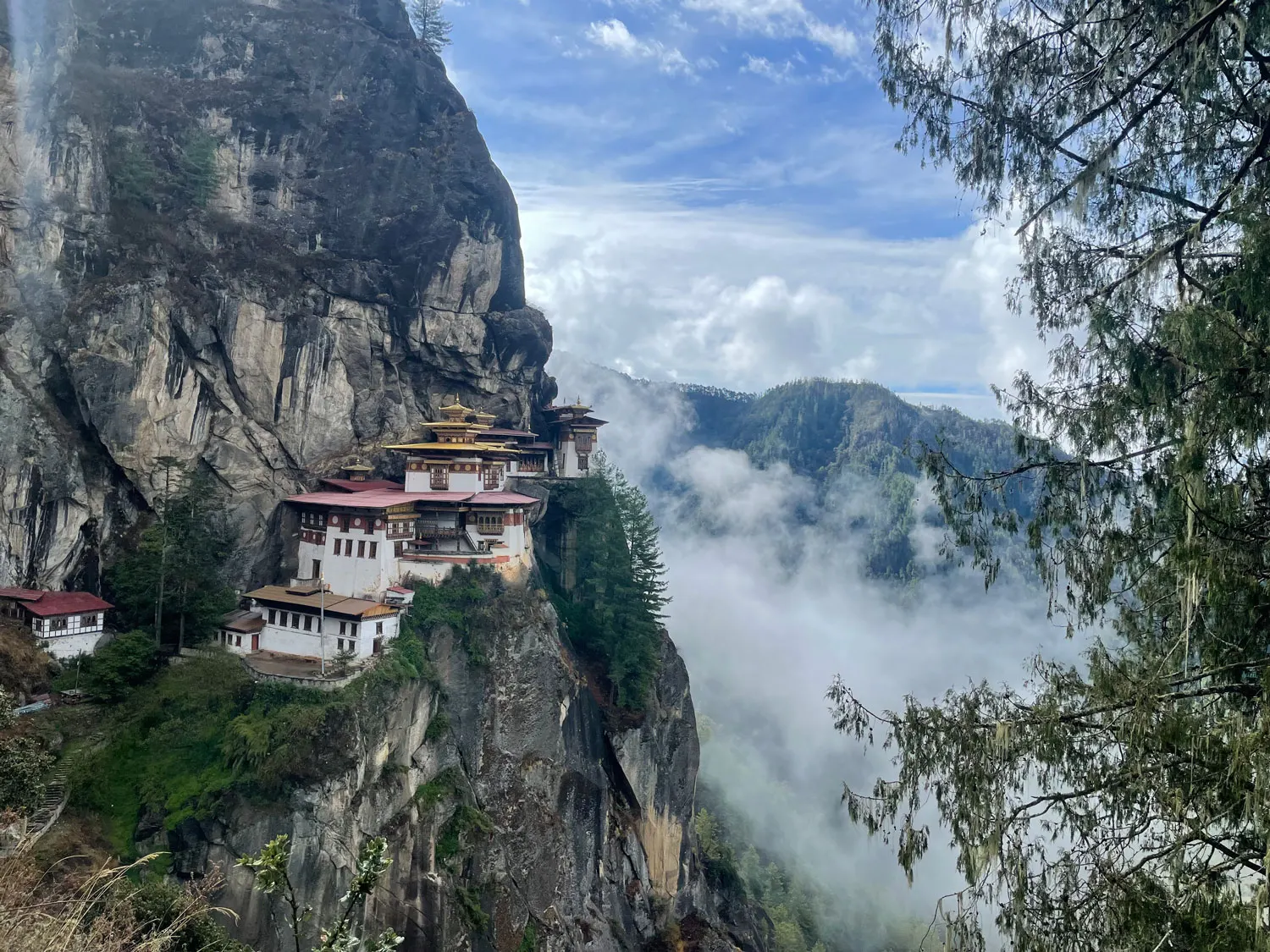
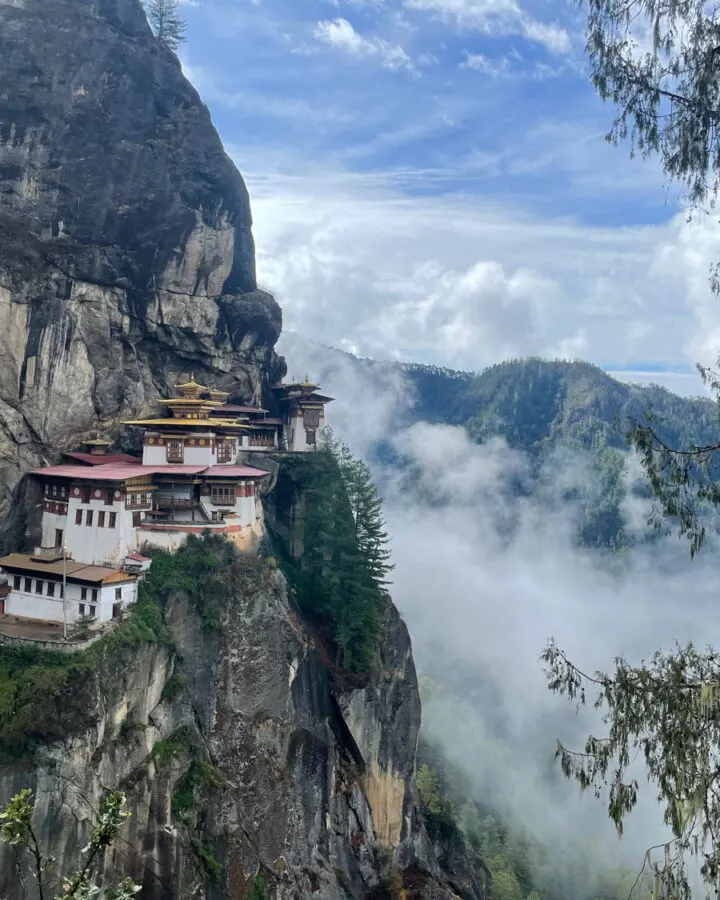
Strenuous treks are extended walking in a mountain terrain at higher altitudes. Trekkers should be able to cope with difficult paths on steep mountainsides. After breakfast, we hike toward one of Bhutan’s most sacred places—the site of a Cliffside monastery and an important pilgrimage destination. Partly damaged by fire in 1998, the Taksang (meaning Tiger’s Nest) Monastery was built atop the cave where Guru Rimpoche, the father of Mahayana Buddhism, meditated for three months after arriving in the Paro Valley on the back of a legendary tigress.
You’re likely to see locals displaying handicrafts for sale along the route to the monastery. The trail rises slowly above the valley, passing through fields, forests and by large prayer wheels turned by a stream. We continue hiking across an open meadow and up a steep trail to a ridge where prayer flags rustle in the wind. Just beyond is the Taktsang teahouse, at 9,200 feet, where we stop to enjoy a hot drink and striking views of the monastery across the valley. Our lunch today takes place at the Taksang View Point Cafeteria enjoying typical Bhutanese food while taking in phenomenal views of the monastery perched across the ravine. We then retrace our steps for the descent back at the base of this rewarding pilgrimage.
Around evening/night Farewell and hot stone bath in Bhutanese farm house
Overnight, Hotel in Paro.
Day 11: Departure
Thank you for visiting Bhutan, we hope you had a great stay here in Bhutan and taking the best memories from Bhutan. Experience to Bhutan wishes you a very safe flight and best wishes, we hope to see you again.
Khadenchela…
What the journey includes
Included
- 3-star hotel accommodation
- All meals (B/L/D)
- Private transportation throughout
- Licensed English-speaking guide
- Experienced driver
- Bhutan visa included
- Government fees, taxes & SDF
- All entrance fees & permits
- Complimentary bottled water
Not included
- International airfare to/from Bhutan
- Personal expenses
- Beverages
- Travel insurance
- Tips & gratuities
Gallery